Transgenerational Queer Connection: Stealthy, Humorous & Full of LOVE!
Sneak into Phyllis’ home with us and discover treasures!
“We entered into her world, we didn’t force her into ours.”
Dottie Lux, caregiver
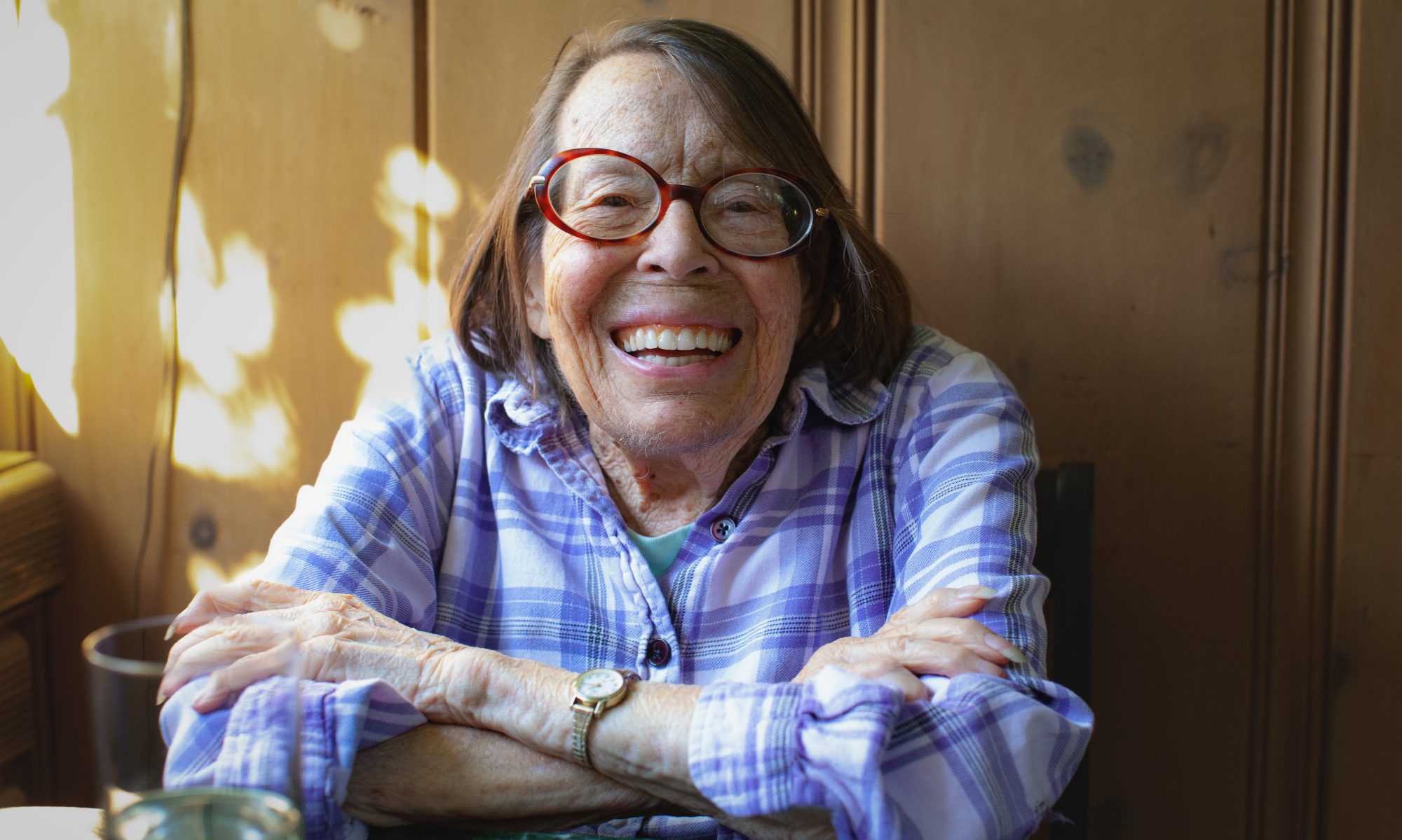
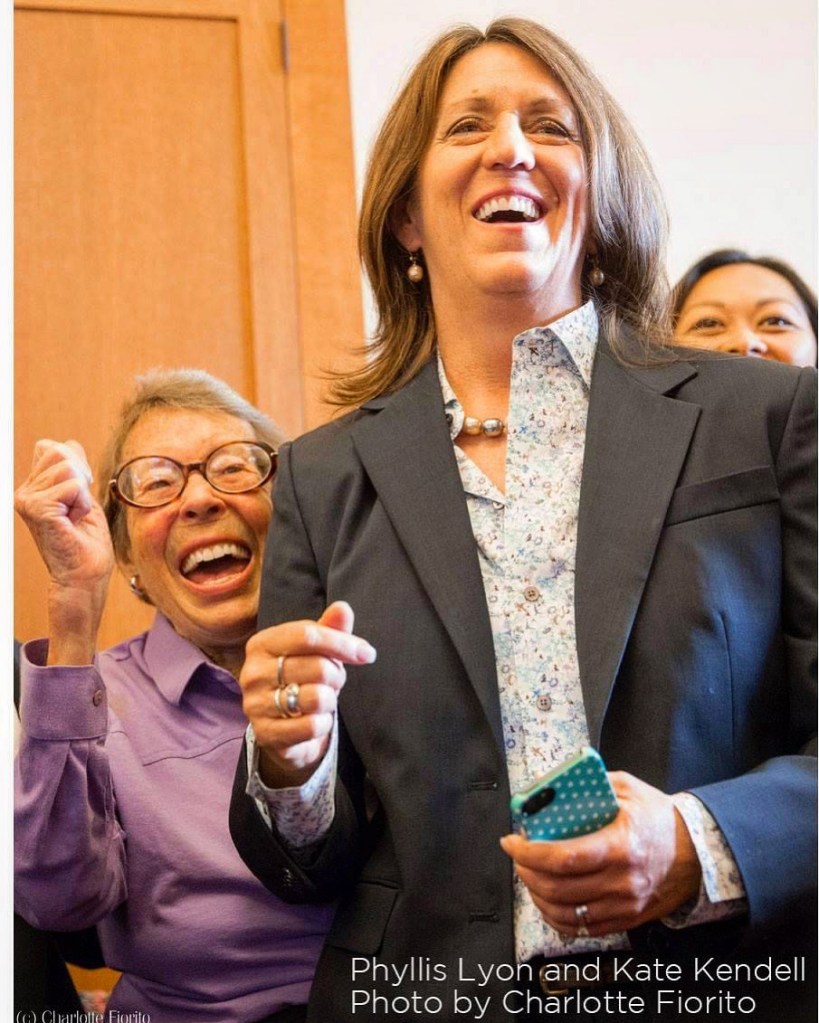
After her wife passed, Phyllis’ Alzheimer’s diminished her ability to care for herself, but her lifelong fierce independence was still strong. She rejected all traditional forms of care. Consequently her family and loved ones devised a way to secretly provide care for her, without sacrificing her integrity and independence.
They began putting together a team of younger queer folks who would be her caregivers, but who would only call themselves “friends” to Phyllis. Everyone was introduced to Phyllis as friends she had known for years, even though they had never met before. In order to maintain the illusion, sometimes just getting in the house took hours of trying to sneak in without getting kicked out by Phyllis who sometimes would catch on. This resulted in so many hilarious stories about the antics they would get up to while passing off shifts with each other and providing continuous care for Phyllis. Phyllis’ family wanted her to, as much as possible, stay in control of her reality, which meant sometimes her caregivers had to stay out of the house even if meant Phyllis missed a meal or even took a fall.
Not all in Phyllis’ community agreed with deceiving her. In The Day the Curtains Came Down we see and feel the inner conflicts of being involved in a loved one’s reality. The film raises questions of what it means to care for a loved one when the bounds of reality are unclear. When Phyllis believed she had returned from ice skating, when it was actually 80 degrees out in San Francisco, her caregivers joined her in her reality. Dottie Lux, a member of the caregiving team said, “we entered into her world, we didn’t force her into ours.”
Many queer elders end up in senior homes that are not culturally queer competent and as a result, the elders go back into the closet because they are unable to be their true selves in these environments. Through all of the challenges, the community of caregivers and Phyllis’ loved ones succeeded in allowing their icon and dearly beloved to pass away in her own home, surrounded by love.
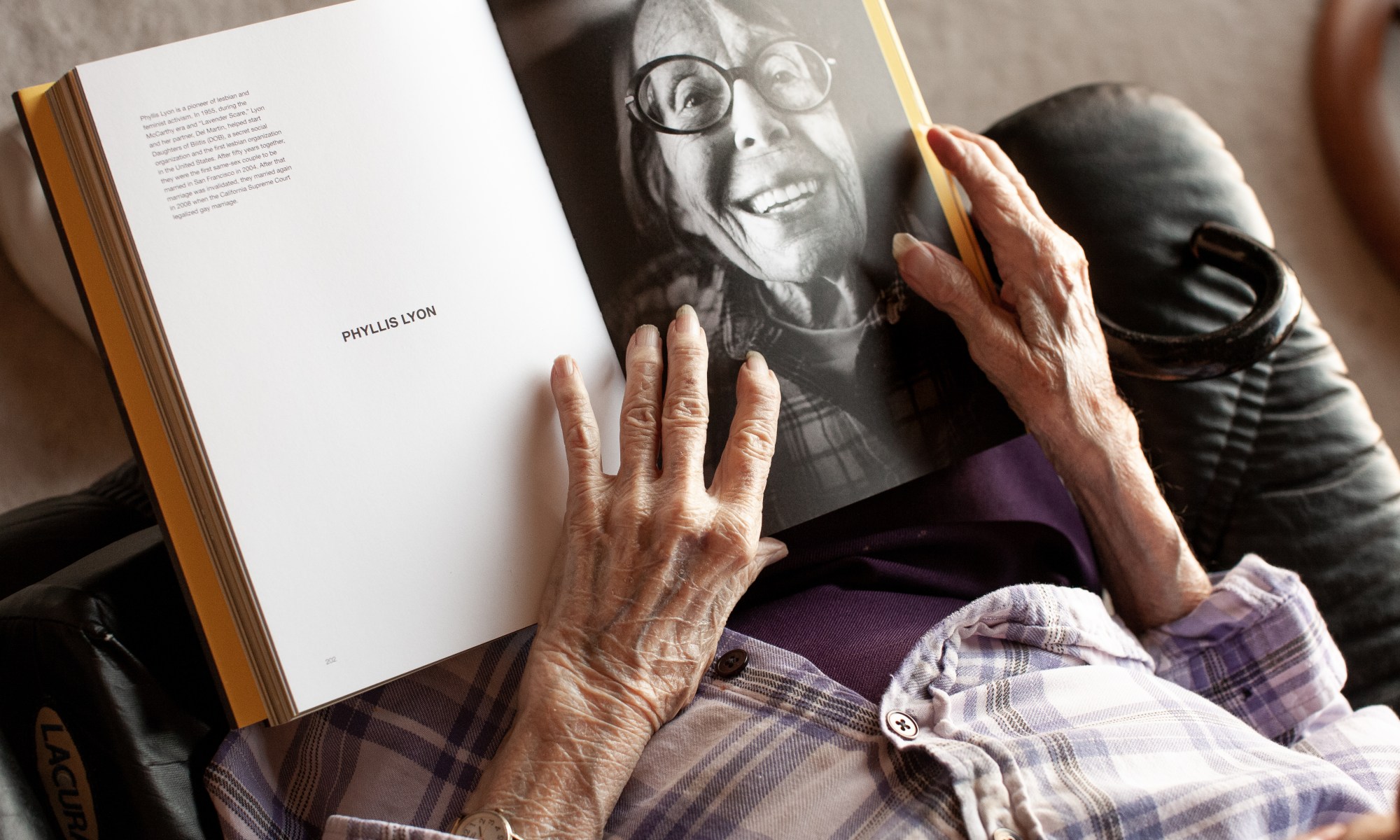
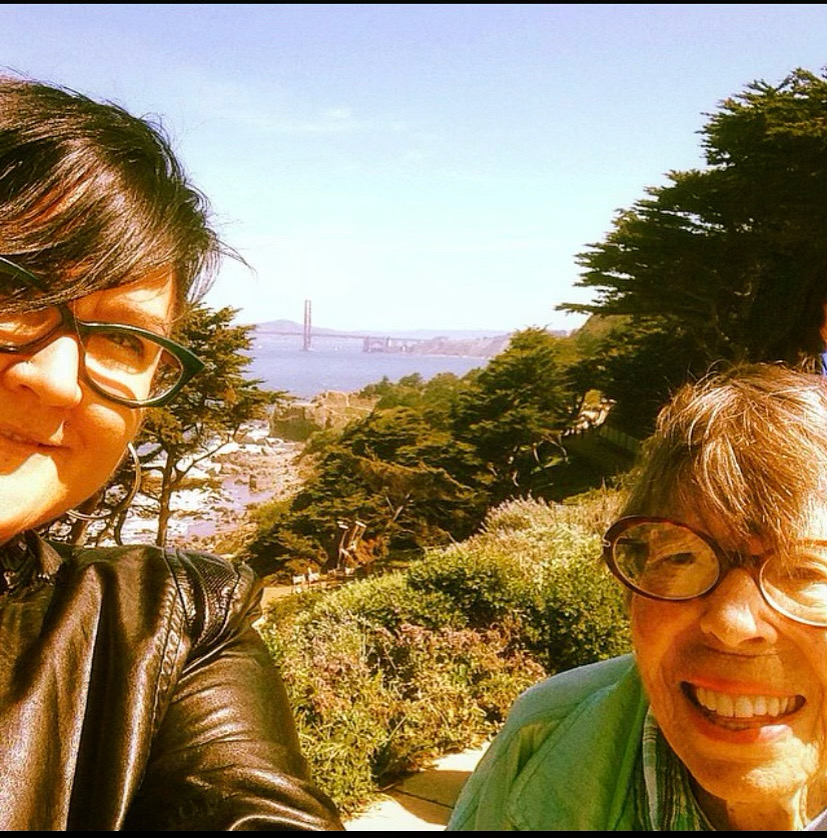
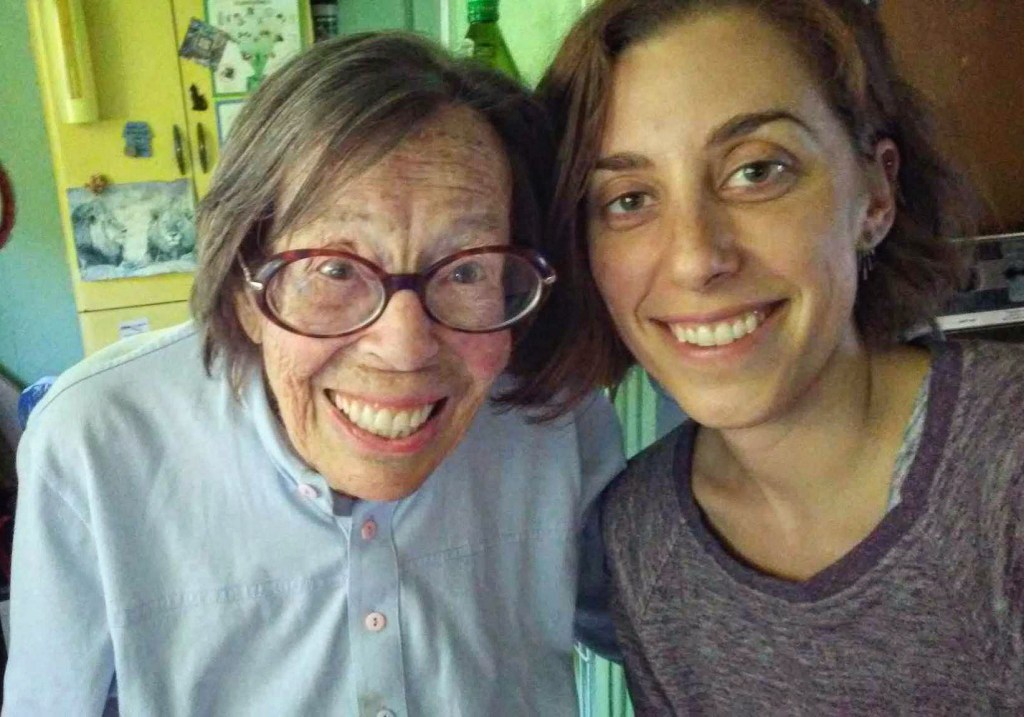
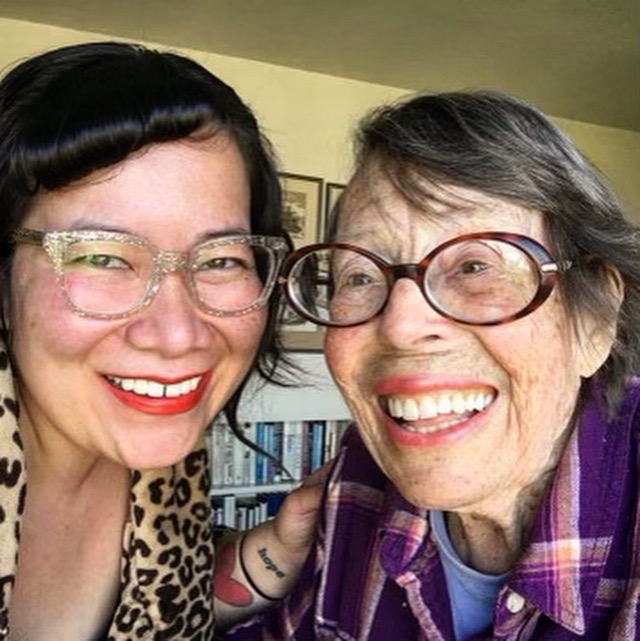
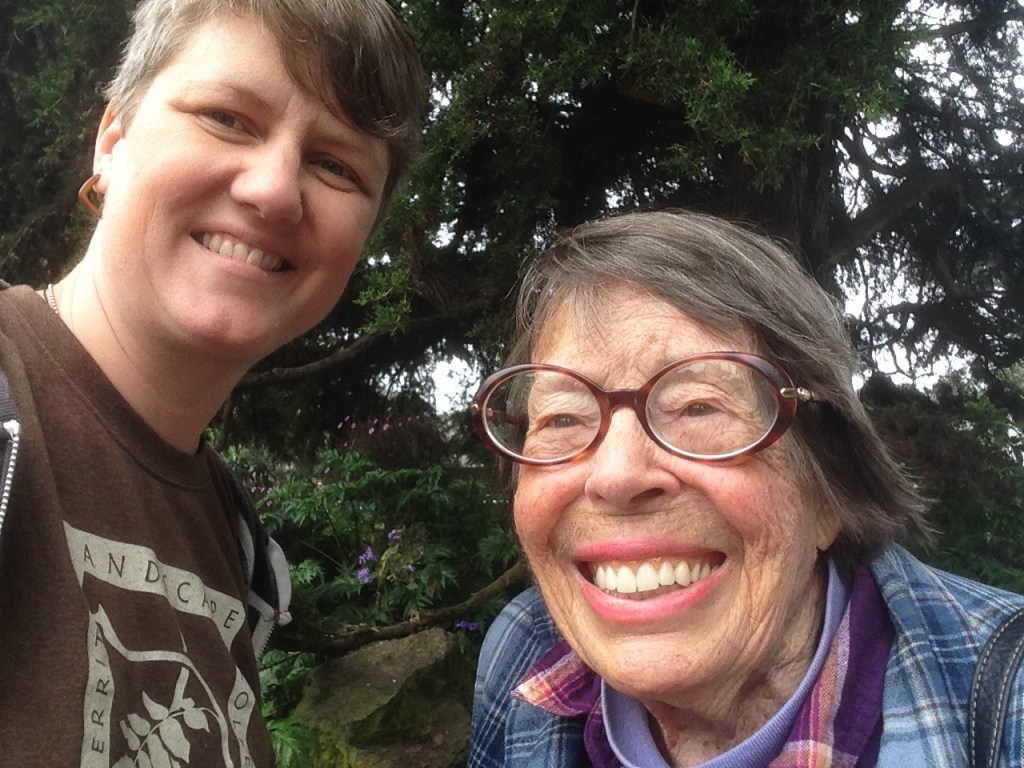
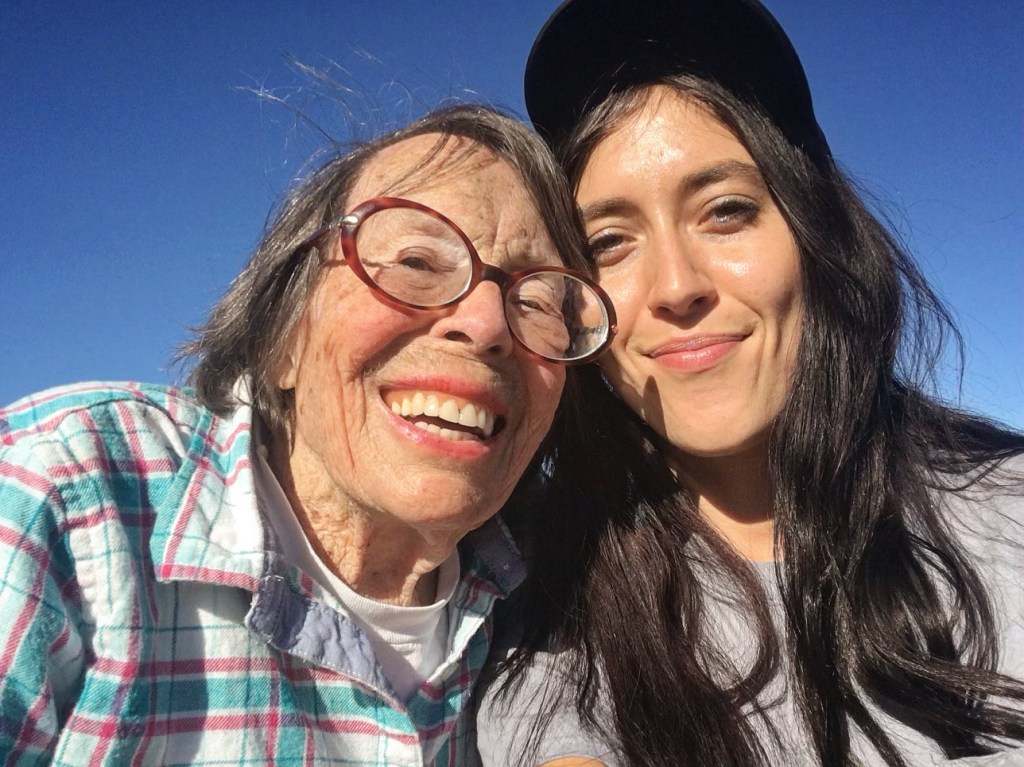
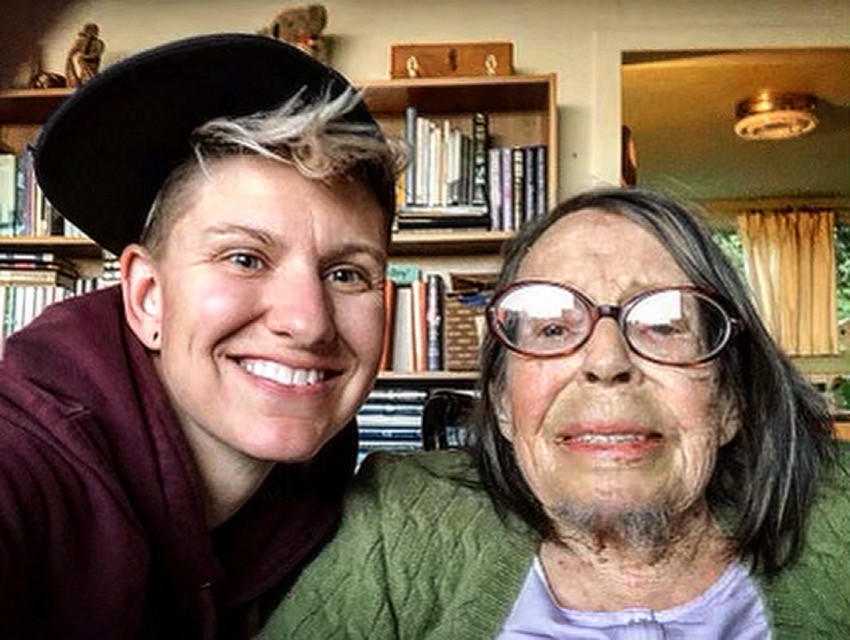
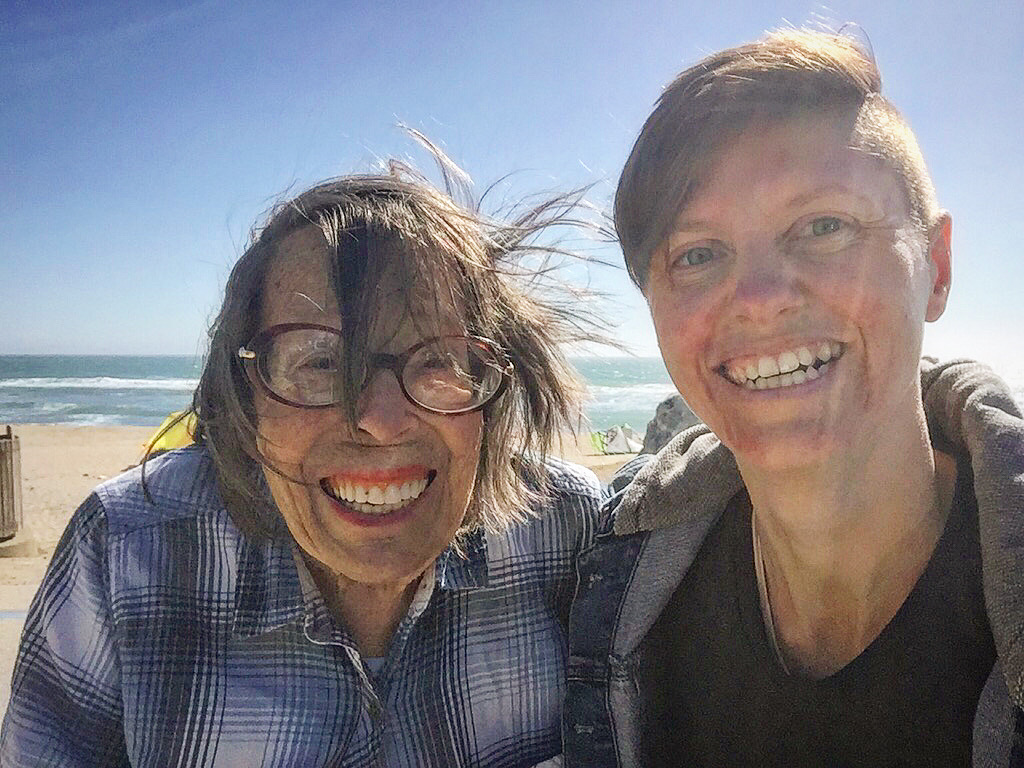
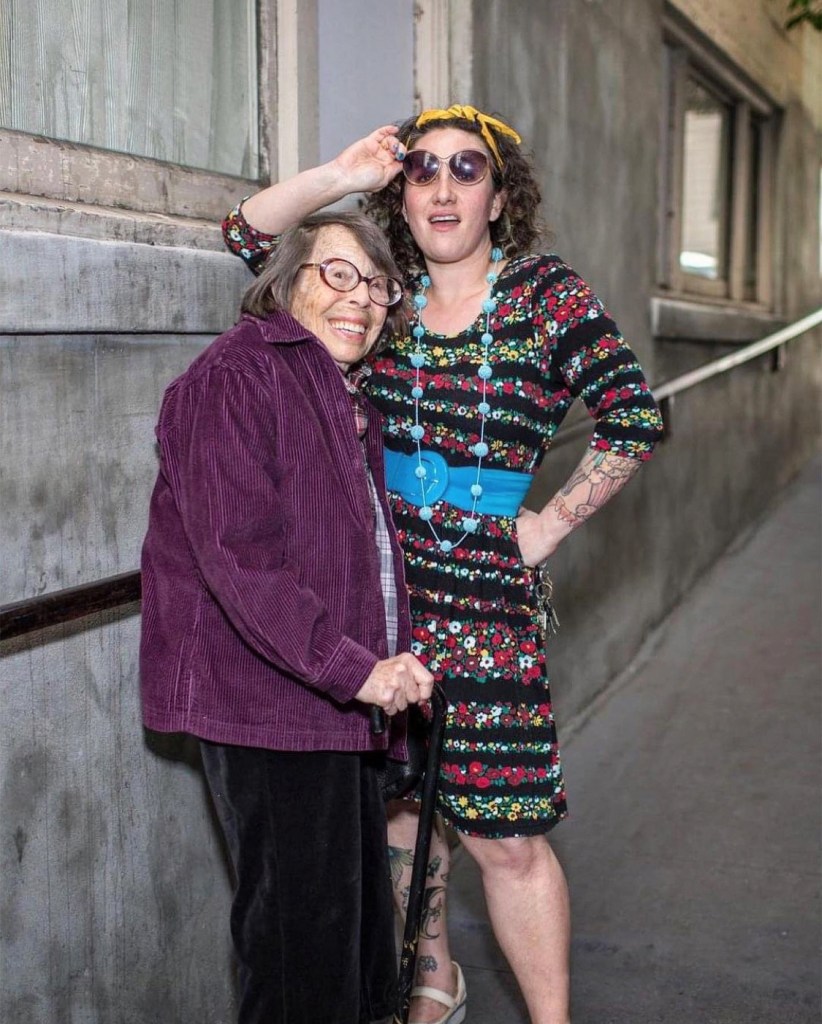
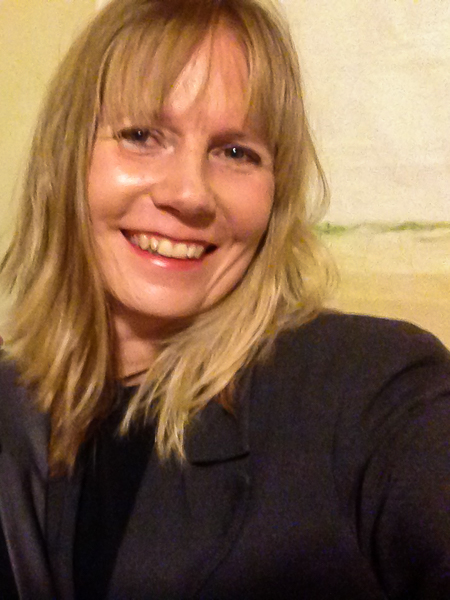
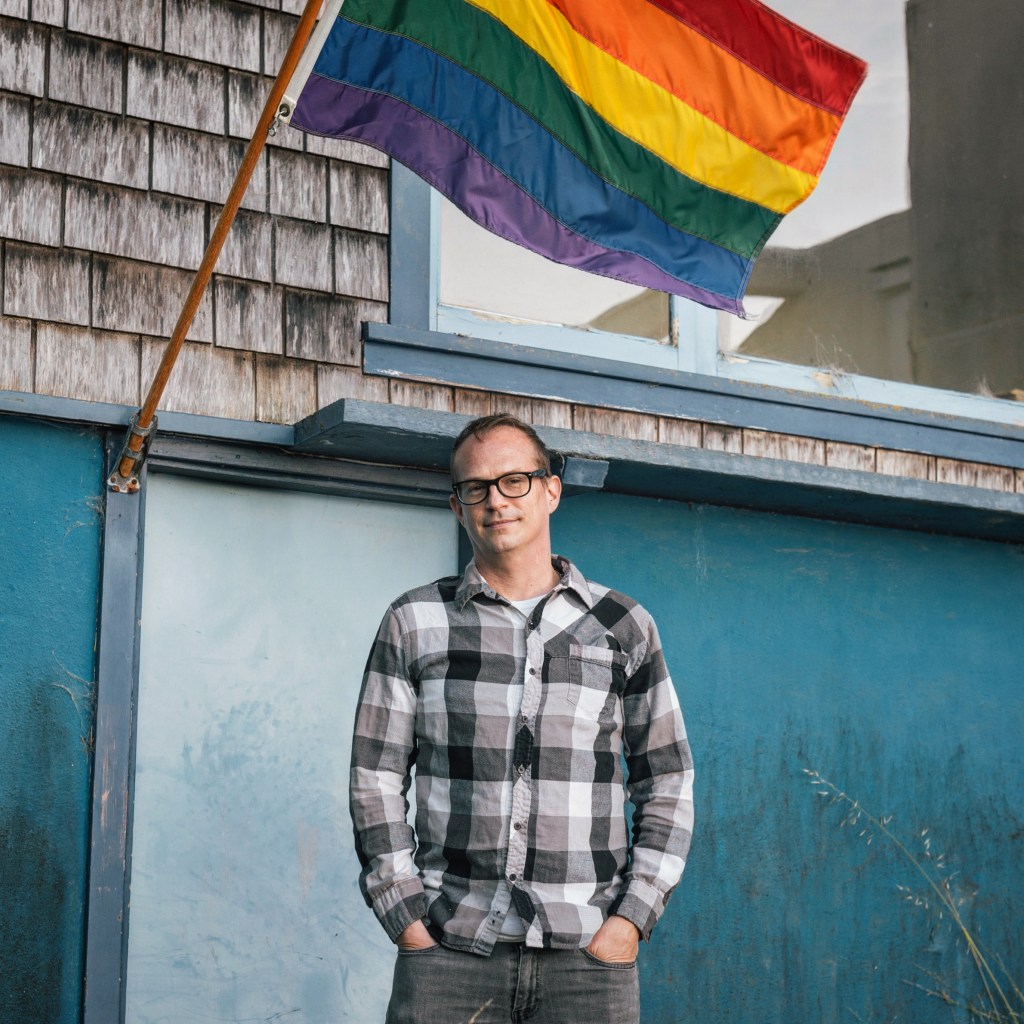
Phyllis’ transgenerational queer caregiving team provided Phyllis with the ease to be comfortable and safe enough to be herself. They came from many walks of life, identifying across the gender spectrum, ranging in age, and included a student, therapist, artist, cabaret performer, sex worker, photojournalist/filmmaker and DJ, among others. Some were covered in tattoos. Some were high femme and used their lipstick to help get Phyllis’ attention in the very best way. What began as the upkeep of an illusion to keep Phyllis safe, turned out to be a beautiful experience of acceptance for the little community, many of whom were not accepted by their own families of origin. Phyllis gave them all a loving, supportive queer grandma. What they all had in common was that they came to find a friend, family, and healing in their connection with Phyllis Lyon.
Phyllis’ Fabulous Care Team & Friends



 The Day the Curtains Came Down